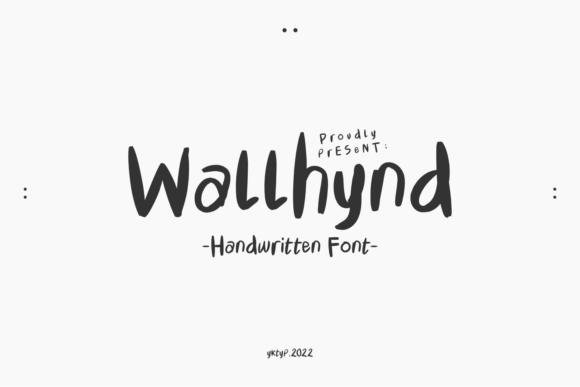
Wallhynd: A Font Born from Creative Persistence
Every now and then, a typeface arrives that carries more than just visual appeal—it carries a story. Wallhynd is one of those fonts. Its journey began quietly near the close of 2021, when its creator started exploring video tutorials on YouTube, engaging with passionate design communities on social media, and experimenting with countless creative pursuits. By early 2022, Wallhynd had taken shape. It wasn't born perfect, and it doesn't pretend to be. But it stands as a testament to what happens when curiosity meets consistent effort: a typeface that feels both personal and purposeful.
For designers, marketers, bloggers, entrepreneurs, and anyone who works with words visually, Wallhynd offers something rare—a font that doesn't just decorate text but gives it a voice. Let's explore what makes it interesting, how you can use it across different projects, and why imperfection can sometimes be a strength worth embracing.
What Makes Wallhynd Distinct
Wallhynd isn't trying to be neutral. It has character, and that character comes from the hands-on process that shaped it. The creator didn't follow a rigid formula; instead, they let experimentation guide the design. Video tutorials taught technique, community feedback refined direction, and personal projects tested what worked. The result is a typeface that feels alive—slightly irregular in ways that add warmth rather than distraction.
The letterforms carry a handcrafted quality. There's an intentional unevenness in stroke weight, a subtle play between structure and spontaneity. This makes Wallhynd especially effective when you want your message to feel human, approachable, or sincere. It works well in contexts where a sterile, corporate look would feel out of place.
What's also worth noting is that Wallhynd has a versatile range of weights and styles. From light, airy versions that work well for headlines to bolder cuts that carry weight in short paragraphs, you have room to play. The extended character set includes ligatures, alternates, and punctuation that behaves predictably across platforms—something practical users will appreciate.
Branding and Identity Work
If you're branding a small business, a creative studio, or a personal project, Wallhynd can help establish a tone that feels grounded yet distinct. Imagine a café's logo where the name appears in a medium weight, paired with simple sans-serif body text. The subtle irregularity in the letters conveys authenticity—like a hand-painted sign, but with digital precision.
For freelancers and solopreneurs, using Wallhynd in your own branding materials can signal that you value craft over mass-produced aesthetics. A business card, a website hero section, or even a simple PDF portfolio can gain character without shouting for attention.
Editorial and Content Design
Bloggers, newsletter writers, and publishers often struggle to find a typeface that works for both short attention-grabbing headlines and longer reading passages. Wallhynd handles this balance reasonably well. Use a bold weight for pull quotes or section titles, then drop into a lighter weight for body copy. The contrast creates visual rhythm without requiring complex layout tricks.
For magazine-style articles or digital magazines, try pairing Wallhynd with a clean serif or a geometric sans-serif. Let Wallhynd handle the display elements—titles, subtitles, and captions—while another font carries the main reading experience. This approach keeps the page organized while giving it a distinctive editorial feel.
Social Media and Digital Content
Social media feeds are crowded. A typeface like Wallhynd can help your posts stand out when used intentionally. For Instagram stories, quote cards, or LinkedIn banners, the font's handcrafted quality adds a layer of personality that standard system fonts lack. Use it for short messages, one-liners, or value propositions where you want the text to feel like it was written, not just typed.
Marketers running ad campaigns for creative products or services might test Wallhynd in header text for landing pages or email headers. The font's slight irregularity catches the eye without feeling gimmicky. It invites the reader to pause—which, in a fast-scrolling environment, is half the battle.
Adapting Wallhynd for Different Audiences and Formats
One of the most practical aspects of Wallhynd is how it adapts across contexts. You don't need to force it into a single use case. Instead, think of it as a tool you can calibrate based on who you're talking to and where they're paying attention.
For Younger, Creative Audiences
When your target audience includes designers, artists, or creative entrepreneurs, use Wallhynd in its more expressive forms. Lean into the alternates and ligatures. Let the font's personality lead the design. A poster for a local art event, a workshop announcement, or a limited-edition product launch can all benefit from the energy that Wallhynd brings. The key is to keep the supporting elements minimal so the typeface stays front and center.
For Professional or Business Contexts
Wallhynd may feel too casual for a law firm or a financial report, but it fits naturally in creative agencies, branding studios, education materials, and lifestyle brands. Use the lighter weights and maintain generous spacing to keep things professional. Pair it with a restrained color palette and plenty of white space. This approach lets the font add warmth without undermining authority.
For Educational and Instructional Content
If you're creating worksheets, guides, or online course materials, Wallhynd can make instructions feel less intimidating. Educational content often struggles with a tone that's either too formal or too childish. Wallhynd sits in a useful middle ground—friendly enough to invite engagement, structured enough to be taken seriously. Use it for headings, key terms, and callout boxes. Leave body text to a clean sans-serif for readability.
Practical Guidance for Using Wallhynd Effectively
Like any typeface with a strong personality, Wallhynd works best when used with intention. Here are some practical recommendations to keep your results clear, consistent, and audience-friendly.
Keep Pairing Simple
Wallhynd already carries visual interest. Pair it with one other typeface at most. Good partners include neutral sans-serifs like Inter, Work Sans, or Open Sans. For a more editorial feel, try a classic serif like Source Serif or Lora. The goal is contrast without competition. Wallhynd leads; the other supports.
Respect White Space
Because Wallhynd letters have a handcrafted quality, they benefit from breathing room. Avoid crowding the font with dense layouts. Use adequate line height, generous margins, and careful kerning. This doesn't mean you need excessive space everywhere—just enough that each letterform can be appreciated without visual clutter.
Test at Different Sizes
Wallhynd performs differently at different scales. At large sizes, its irregularities become expressive details. At smaller sizes, those same details might feel distracting if not handled carefully. Always preview your designs at the actual size your audience will see them. Adjust weight, spacing, and pairing accordingly.
Use Alternates Sparingly
The alternate characters in Wallhynd are tempting to overuse. Resist that urge. One or two alternates per design—applied to key words or initial letters—create emphasis. Using them everywhere makes the text feel chaotic. Let the standard characters do the heavy lifting, and bring in alternates for moments that deserve extra attention.
Consider Context and Platform
Wallhynd renders well on most modern screens and in print. But if you're designing for a platform with limited font support, plan fallbacks carefully. Test your designs in the environments where they'll actually appear. A font that looks perfect in a design tool might behave differently in a web browser or a mobile app.
Why Wallhynd Matters for Creative Practitioners
What makes Wallhynd worth considering goes beyond its visual qualities. The font represents an approach to creative work that prioritizes growth over perfection. It didn't emerge fully formed from a single moment of inspiration. It evolved through learning, feedback, and iteration. That process is something every designer, marketer, and entrepreneur can relate to.
Using a typeface like Wallhynd in your projects means you're choosing character over conformity. You're saying that the voice behind the message matters as much as the message itself. For a small business owner building a brand from scratch, or a freelancer crafting a portfolio that feels personal, that distinction can make all the difference.
The font works because it doesn't try to be everything to everyone. It has a specific tone, a clear personality, and honest limitations. Knowing when to use it—and when not to—is part of developing your own creative judgment. Wallhynd challenges you to think about intention in your typography choices, which is a useful skill in any creative discipline.
Getting Started with Wallhynd
If you're ready to experiment, start small. Pick one project—a single social media graphic, a newsletter header, or a product label—and use Wallhynd in a focused way. See how it changes the feel of that piece. Compare it to what you would have used before. Notice how the tone shifts. That kind of direct experience will tell you more than any description can.
You can also test Wallhynd in combination with your existing design toolkit. Drop it into a layout you already have and see what happens. Sometimes a fresh typeface is all it takes to rediscover energy in a project that felt stuck.
Wallhynd is not a font that shouts for attention. It waits for someone who notices the details. If that sounds like the kind of tool you want in your creative arsenal, there's no better time to start exploring what it can do. Whether you're designing for yourself, your clients, or your community, Wallhynd offers a voice that's worth listening to.