Geometric Patterns of the East: A Modern Stitch on an Ancient Art
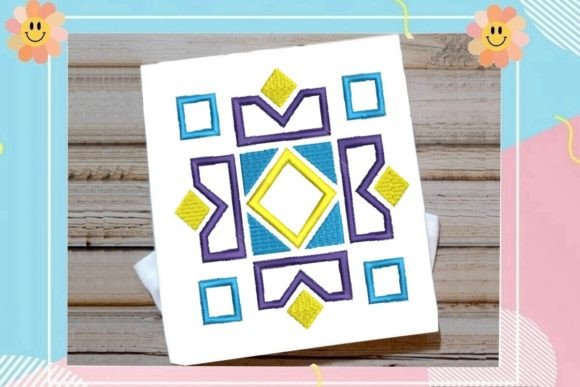
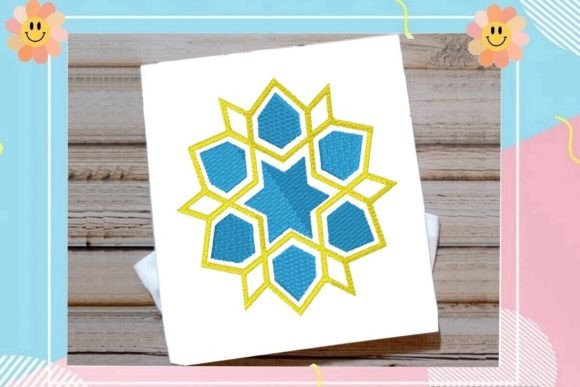
Few artistic traditions are as instantly recognizable—or as deeply meaningful—as the geometric patterns that have flourished across the Middle East, North Africa, and Central Asia for centuries. From the tiled walls of Moroccan palaces to the intricate stonework of Persian mosques, these designs communicate order, spirituality, and an almost mathematical harmony. Today, that same visual language is finding a new canvas in the world of machine embroidery. Geometric Patterns of the East is a high-quality machine embroidery design that brings this ancient aesthetic into contemporary craft. At its heart lies a stunning Moroccan-inspired pattern called Zellige, enriched with colorful Zakhrapha motifs—a combination that embodies both tradition and modernity.
Whether you are a seasoned embroiderer or someone just beginning to explore decorative stitching, this design offers a rare opportunity to work with a pattern that carries centuries of cultural significance while fitting seamlessly into today's creative projects. Let's explore what makes this design so special, where it comes from, and how you can use it to add an elegant, sophisticated touch to nearly any fabric item.
What Is Zellige? The Art of Tessellated Geometry
Zellige (also spelled zillij or zellij) is a form of Islamic geometric tilework that originated in the Maghreb region—particularly Morocco—and later spread to Al-Andalus in Spain. Artisans hand-cut glazed ceramic tiles into precise shapes—stars, diamonds, polygons, and interlocking curves—then assemble them into complex, repeating mosaics. The result is a surface that seems to pulse with symmetry and light.
What makes Zellige so captivating is its reliance on pure geometry. There are no figurative images; instead, the design is built from repeating patterns that radiate outward from a central point. This reflects a core principle in Islamic art: the idea that geometric order mirrors the divine order of the universe. Every line, angle, and repetition has intention. Geometric Patterns of the East captures this spirit beautifully in a machine embroidery format, translating the crisp lines and layered motifs of Zellige into stitchable form.
The Role of Zakhrapha Motifs
Within the Zellige tradition, you will often find Zakhrapha—an Arabic term referring to decorative ornament or intricate embellishment. Zakhrapha motifs include floral arabesques, interlacing vines, and stylized leaves that weave between the geometric framework. In the Geometric Patterns of the East design, these motifs appear in lively colors, bringing warmth and visual depth to the strict geometry.
The combination of Zellige structure with Zakhrapha ornament creates a rare balance: order meets organic flourish. The geometric grid provides stability, while the colorful floral details add rhythm and softness. This is not just a pattern—it is a conversation between discipline and creativity, between the timeless and the living.
Tradition Meets Modernity in Embroidery
One of the most appealing aspects of this embroidery design is how it bridges two worlds. On one hand, it honors a craft that has been passed down through generations of Moroccan and Andalusian artisans. On the other, it is built for modern tools: digital machine embroidery files that can be loaded into your embroidery machine and stitched with precision.
This fusion matters because it makes a historically rich art form accessible to anyone with a machine and a bit of fabric. You do not need to be a master tile cutter or spend months learning the geometry of Zellige by hand. Instead, you can create a piece that echoes those same patterns in thread—on a cushion cover, a t-shirt, a tote bag, or even a bedsheet.
The design itself is structured to look both authentic and contemporary. The geometric framework remains faithful to traditional Zellige proportions, while the color palette and scale are optimized for embroidery. The result is a design that feels timeless yet fresh—a piece that could sit comfortably in a Moroccan riad or a modern minimalist apartment.
Practical Applications: Where to Use This Design
Because Geometric Patterns of the East is a machine embroidery design, it can be applied to a wide range of fabric items. Its versatility is one of its greatest strengths. Here are some ideas to spark your creativity:
- Cushion covers and pillows – A bold geometric pattern on a cushion can become the focal point of a living room or bedroom. The Zellige-inspired design adds an exotic yet refined touch.
- T-shirts and casual wear – Embroidered on the front pocket area or across the back, this design transforms a simple shirt into a wearable work of art.
- Table linens and napkins – Add a border of the pattern to tablecloths or placemats for an elegant dining setting.
- Bed sheets and duvet covers – Though less common, embroidered bed linens carry a sense of luxury. A repeating geometric motif along the edge of a sheet or pillowcase can be stunning.
- Tote bags and accessories – A small version of the design works beautifully on bags, pouches, or even hats.
- Home decor accents – Consider framed embroidery hoops as wall art, or stitch the design onto fabric for a DIY upholstery project.
In each case, the design adds what we might call elegant sophistication—a quality that comes from the pattern's inherent symmetry and cultural resonance. It does not compete with the item; it elevates it.
Understanding the Technical Side: File Formats and Compatibility
For those new to machine embroidery, the variety of file formats can be confusing. The good news is that Geometric Patterns of the East comes with multiple file formats designed to work with the most common embroidery machines. This means you can use it whether you own a Brother, Janome, Singer, Bernina, Husqvarna Viking, or any other major brand.
Typical formats included are:
- .PES – for Brother, Babylock, and many home machines
- .DST – a universal format used by Tajima and many commercial machines
- .EXP – for Bernina and other European machines
- .HUS – for Husqvarna Viking and Pfaff
- .VIP – for Janome and some older models
- .JEF – for Janome Memory Craft machines
This wide compatibility ensures that you can download the design and start stitching without needing to convert files or worry about format errors. Always check your machine's manual to confirm which format it reads best, but in most cases, one of these standard formats will work perfectly.
Hooping and Stabilization Tips
Because geometric patterns often involve straight lines, sharp angles, and dense stitching, proper hooping and stabilization are important. Here are a few practical pointers:
- Use a quality stabilizer: A tear-away or cut-away stabilizer works well for woven fabrics. For stretchy knits like t-shirts, use a cut-away stabilizer to prevent distortion.
- Hoop firmly but not too tight: The fabric should lie flat without stretching. Stretched fabric can cause misalignment in geometric patterns.
- Choose the right needle: A 75/11 or 80/12 embroidery needle is suitable for most medium-weight fabrics. If you are working on denim or thick canvas, go up to a 90/14.
- Test first: Always run a test stitch on a scrap of the same fabric to check tension, size, and placement.
These small steps will help you achieve crisp, precise results that do justice to the intricacy of the Zellige design.
Clarifying Common Misunderstandings
Let us address a few assumptions that sometimes come up with geometric embroidery designs like this one.
Misunderstanding 1: "Geometric patterns are cold or impersonal." Some people assume that because geometry is mathematical, it lacks warmth. In reality, Zellige and Zakhrapha patterns are anything but cold. The interplay of colors, the layering of shapes, and the organic floral details bring a sense of life and movement. The geometry is not rigid—it is rhythmic.
Misunderstanding 2: "This design is only for advanced embroiderers." While the pattern looks complex, machine embroidery handles the heavy lifting. If you can hoop fabric and load a design, you can stitch this. The design has been digitized with clear stitch paths, so even intermediate hobbyists can achieve excellent results. Beginners should feel confident trying it on a stable fabric like cotton or linen.
Misunderstanding 3: "Traditional patterns don't belong on modern clothing." On the contrary, geometric patterns are having a resurgence in fashion and interior design. Their clean lines and symmetrical balance fit perfectly with contemporary aesthetics. Combining a centuries-old Zellige pattern with a modern t-shirt or minimalist cushion is exactly the kind of fusion that designers and crafters are celebrating today.
The Significance of This Design in Modern Craft
Why does a design like Geometric Patterns of the East matter now? In an era where mass production and digital everything dominate, there is a growing hunger for work that feels meaningful—pieces that carry a story, a technique, or a cultural connection. Embroidery itself is enjoying a renaissance as a mindful, hands-on activity. Adding a pattern with roots in one of the world's great decorative traditions takes that satisfaction to another level.
When you stitch this design, you are not just filling a hoop with thread. You are engaging with a visual language that has been refined over a thousand years. You are participating in a tradition that values patience, symmetry, and beauty. And you are creating something that will last—both physically, as a stitched item, and symbolically, as a link to a rich artistic heritage.
This aligns with the principles of helpful content and E-E-A-T (Experience, Expertise, Authoritativeness, Trustworthiness) because the design is grounded in real cultural practice. It is not a generic geometric shape; it is a faithful interpretation of a specific artistic tradition, adapted for modern use with care and respect.
Bringing It All Together: A Design for Everyone
Whether you are embroidering a gift for a friend, adding a personal touch to your home, or creating items to sell, Geometric Patterns of the East offers a distinctive look that stands out. Its Zellige foundation gives it structural beauty; its Zakhrapha motifs add color and life. The design is both a conversation starter and a source of quiet elegance.
And because it comes in multiple file formats, you do not have to worry about machine compatibility. You can focus on what matters most: choosing your fabric, selecting your threads, and enjoying the process of watching an ancient pattern come to life under your needle.
In a world filled with fleeting trends, this design connects you to something enduring. It is a stitch across time—a thread that links the master tile makers of Fez with the modern maker in their own creative space. That is the real magic of Geometric Patterns of the East.
Final Thoughts
Embroidery is more than decoration. It is a way of telling stories and keeping traditions alive. With this design, you are not just stitching a pattern; you are continuing a lineage of geometric art that has inspired wonder for centuries. So go ahead—hoop your fabric, load the file, and let the Zellige mosaic unfold. Your finished piece will carry the elegance of the East and the satisfaction of your own craft.
Whether it becomes a cushion, a shirt, or a sheet, you can be proud of the result. And every time you see it, you will remember that some patterns are timeless—and now, yours is among them.